Do You Load Your Forklifts Properly
Do You Load Your Forklifts Properly
Loading Forklifts Properly is a matter not contemplated by many companies. In my years in construction, a telehandler forklift was always used to whatever it would do. The danger in that practice is that you end up causing damage to the forklift over the years and eventually you can have an accident if the damage is caught in time. If you own the forklift, these issues will come back to haunt you. The solution is simply to change your practices preventatively. Let’s take a look at what we mean and how you can win in the short term, and the long term.
Using Equipment as the Manufacturer Intends.
Using Equipment as the Manufacturer Intends is a safety 101. You don’t buy a Ford Maverick Pick up truck to haul a 20,000 lb excavator. Clearly, people behave this way. But as employers, you have to make sure this isn’t happening on your watch. When it comes to forklifts, you have to make sure they are loaded as the manufacturer intends. That’s the weight evenly placed on both forks of the carriage, on the hook supplied in some way, or on an approved Forklift Attachment. Approved? What do we mean by approved? If you put anything on the forks that is now the load supporter, you have to ask the manufacturer to approve it. Hook Spreader that’s as simple as it can be. You need a chart for it. Jib? Need a chart. Clamp for barrels? Chart. OSHA 1910.178
Letter of Interpretation on the subject Excerpt:
Question: Are sections (a)(4) and (5) stand alone sections? Should it be interpreted that prior written approval is required from the manufacturer to use front-end attachments as well as making any modifications and/or additions to a powered industrial truck.
Reply: A front-end attachment would generally be an "addition" within the meaning of §1910.178(a)(4) that affects capacity and safe operation. Section §1910.178(a)(5) assumes that the truck with the attachments will already be, "marked to identify the attachments and show the approximate weight of the truck and attachment combination at maximum elevation with load laterally centered." Before a non-factory-installed attachment may be used, however, the user must comply both with (a)(4), by obtaining the truck manufacturer's written approval, and with (a)(5), by having the truck appropriately marked.
Marking the Forklift with a Chart
Marking the Forklift with a Chart is critical. Not only for compliance, but so your employee/operator knows what it is rated for and how to use it. From a risk management perspective, without the chart on the forklift showing how it is approved for use, your employees are going to be left to guess. I think we all know that people will find the limit and exceed it unless we tell them what the actual limit is. The chart stops them from exceeding the limit and tells the OSHA inspectors that you as the employer have done your part.
To get the markings, we share a drawing and brochure of the attachment with you. You share that with the forklift manufacturer. They will provide you with the approval for use unless there is a reason not to.
Why Do We Need to Do This?
I was out traveling last week and saw an example of how people load forklifts if they don’t have guidance. It is a scenario that has multiple issues to consider.
Forklift carriage loaded unevenly - Rated for zero lbs as used.
Flat Strap Sling twisted - Not used as designed.
Flat Strap on sharp edge not respecting D/d ratio requirements.
Chain Sling holding Block by compression only. Bounce in travel would drop the load.
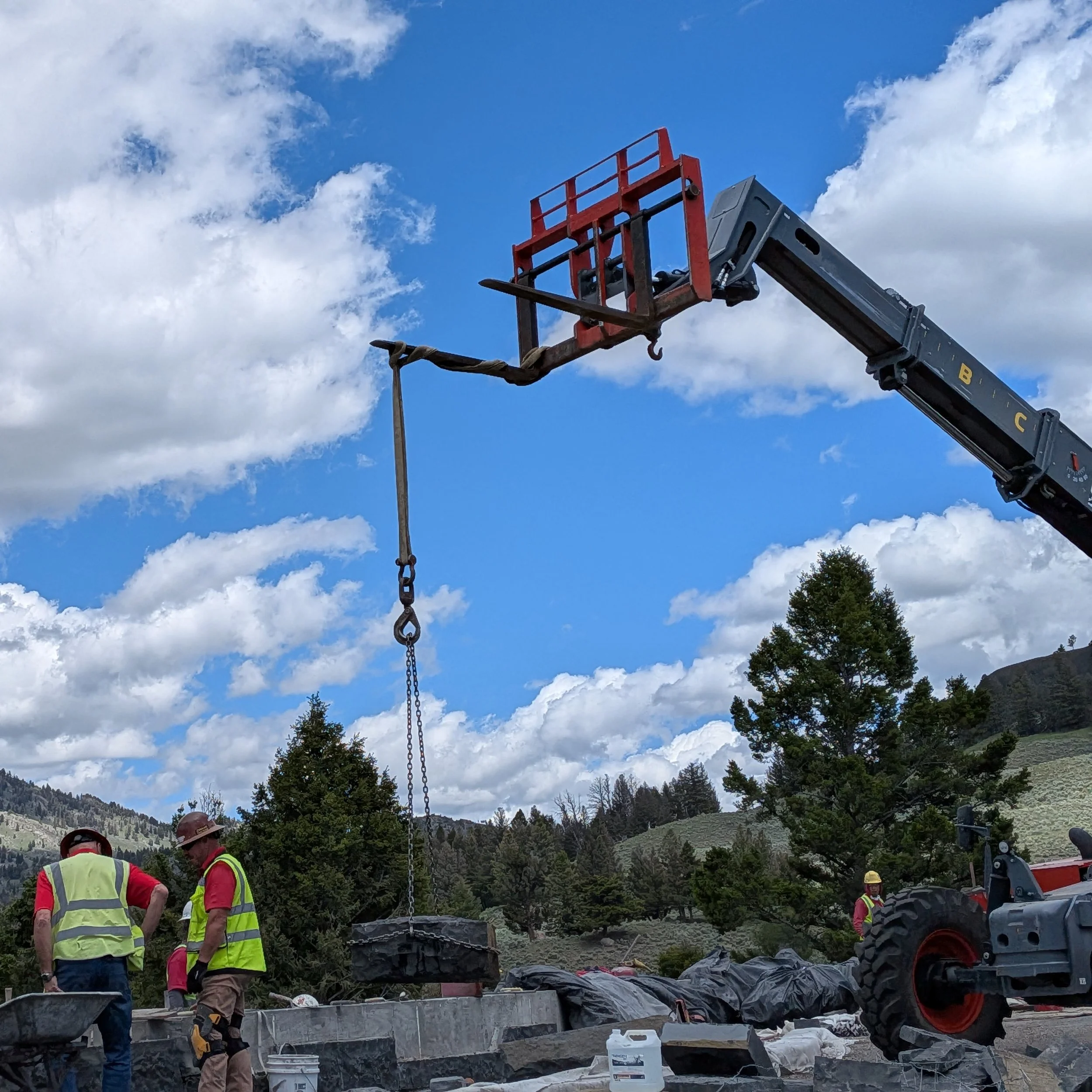
Example of improperly loading a forklift.
Forklift Jibs Load Forklifts Evenly
Forklift Attachments that slide onto both forks are designed to load both forks evenly. This prevents torsional load in the carriage, forks, and the boom if it’s telehandler. There are remaining issues for the manufacturer to review with regard to loads that might be caused by reach. For example, our jibs can lift 1900 lbs out at 12’ from the backstop. Are the forks structurally able to handle that loading? A manufacturer should be reviewing this. Where is the limit of your forklift with that reach? If you have a 1056 forklift with the stabilizers up, you might only be able to get to 24’ of extension before you’ve reached the limit. Should you add in the 12’ of reach the jib provides? Or can you still presume that 24’ is the number on the original chart? And this is the math that the manufacturer will do to help determine where the stability triangle will remain and protect the company and the employees.
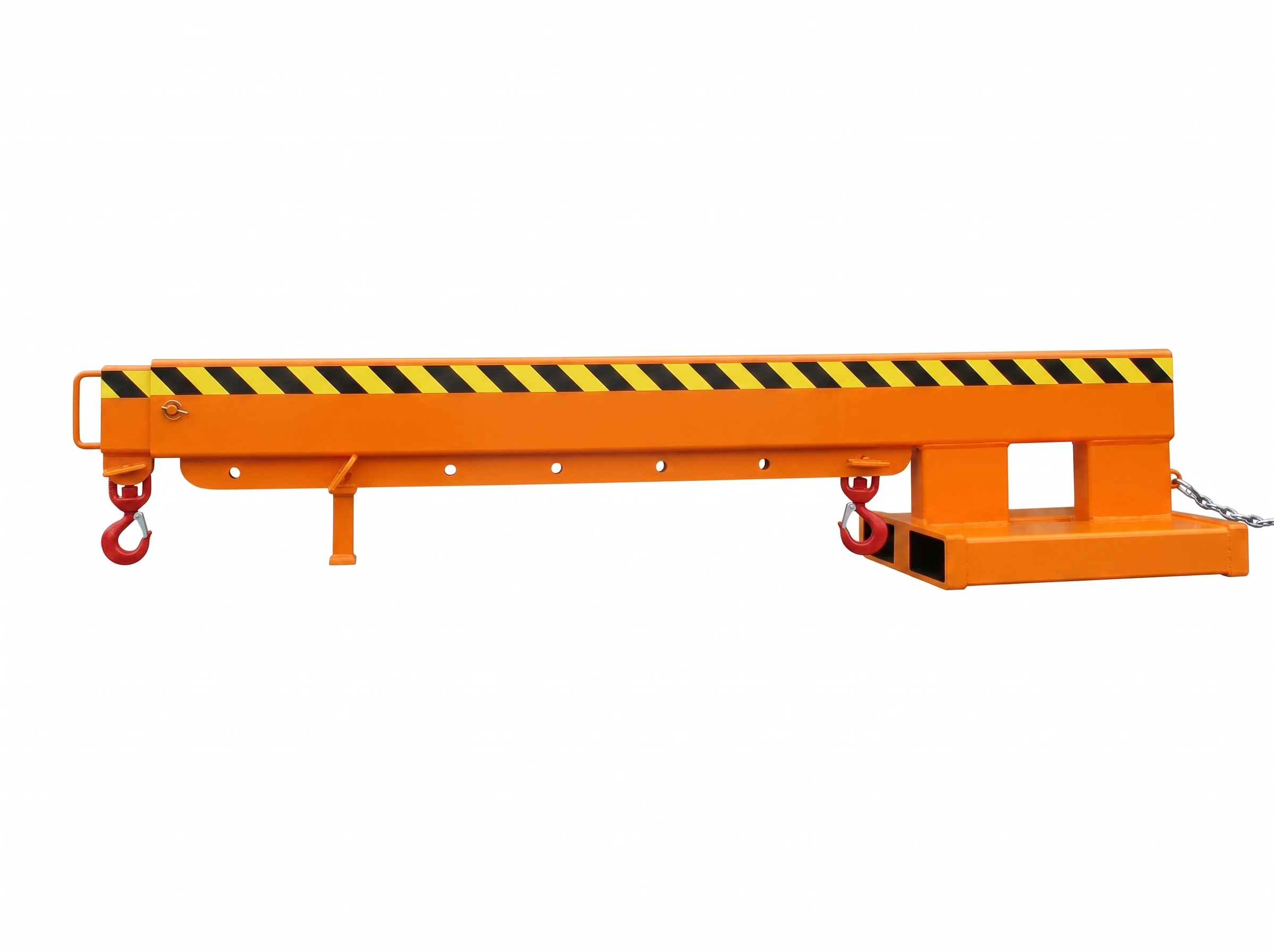
Eichinger forklift jib that would solve the uneven forklift loading.
Clamps Lift Masonry Blocks With a Rating
Using Clamps instead of slings will also provide a rating. In the example above, we have chains being used at an angle of 180 degrees. If you ask a manufacturer for a rating of a chain pulled at 180 degrees, they aren’t going to give you a rating. It’s not on the tag. While it will work if you consider the strength and a 50% safety factor, it’s not a legal practice as it’s not shown on the tagging or any manufacturer literature. We have Model 1562 Clamps that achieve this goal of transferring load from horizontal to vertical and clamp the masonry block. We do this with a 3:1 safety factor as required by ASME B30.20. They are even adjustable and can be ordered in various capacities up to 8800 lbs for this design.
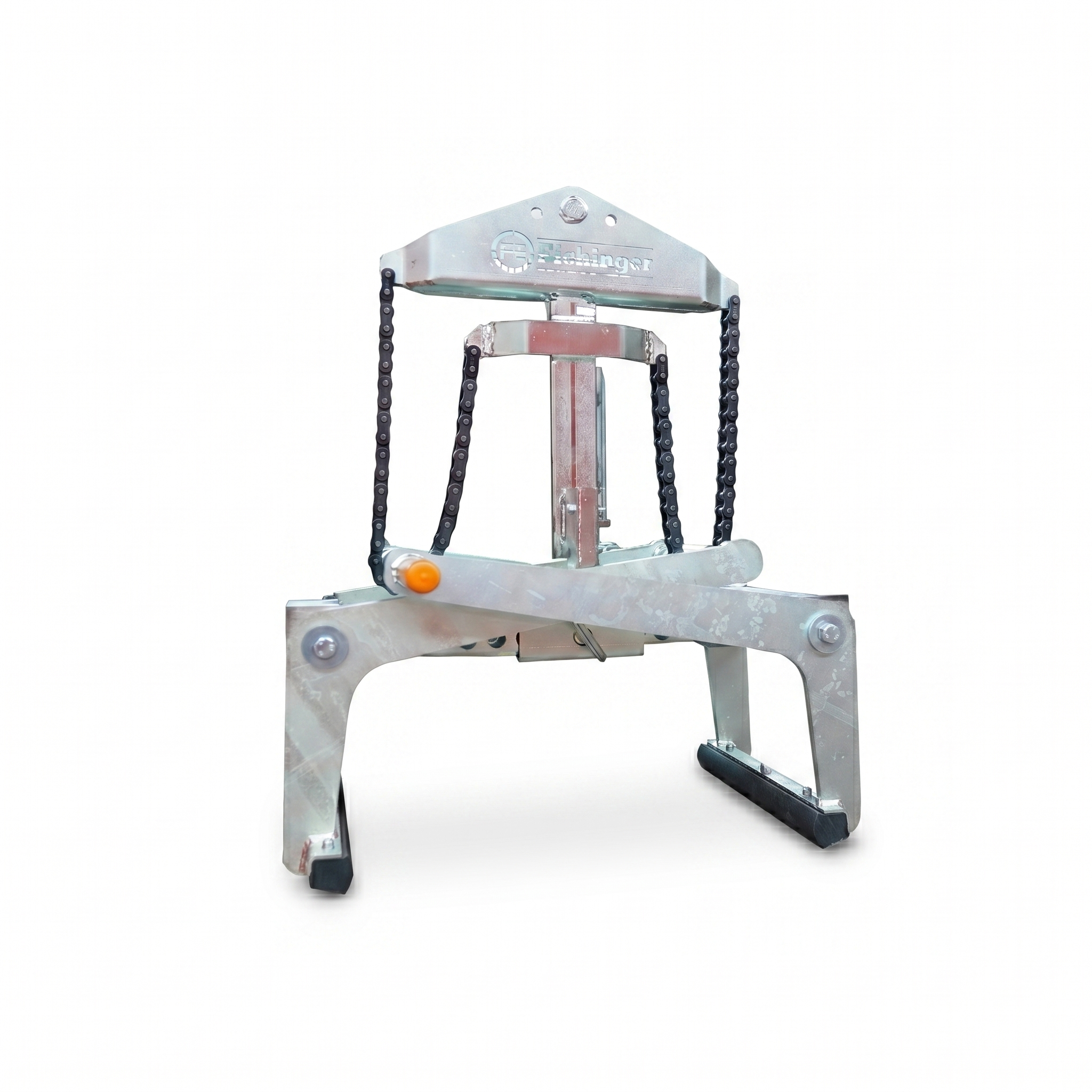
Eichinger Model 1562 Masonry Clamp
Forklift Attachments From Crane Gear
Forklift Attachments from Crane Gear can come with a drawing so the forklift manufacturers can tell you how to use them with their forklifts. If we don’t give the field personnel the guidance to do this, they will do their best to get by and to get the job done. But if you want it done right, it has to begin with buying the right tools for the job and getting it approved by your forklift manufacturers. We have large catalogs that will help you succeed. You can find links to the catalogs on this page. Come find the forklift attachments you need on our forklift attachments page, or here at ForkliftGear.net as well.